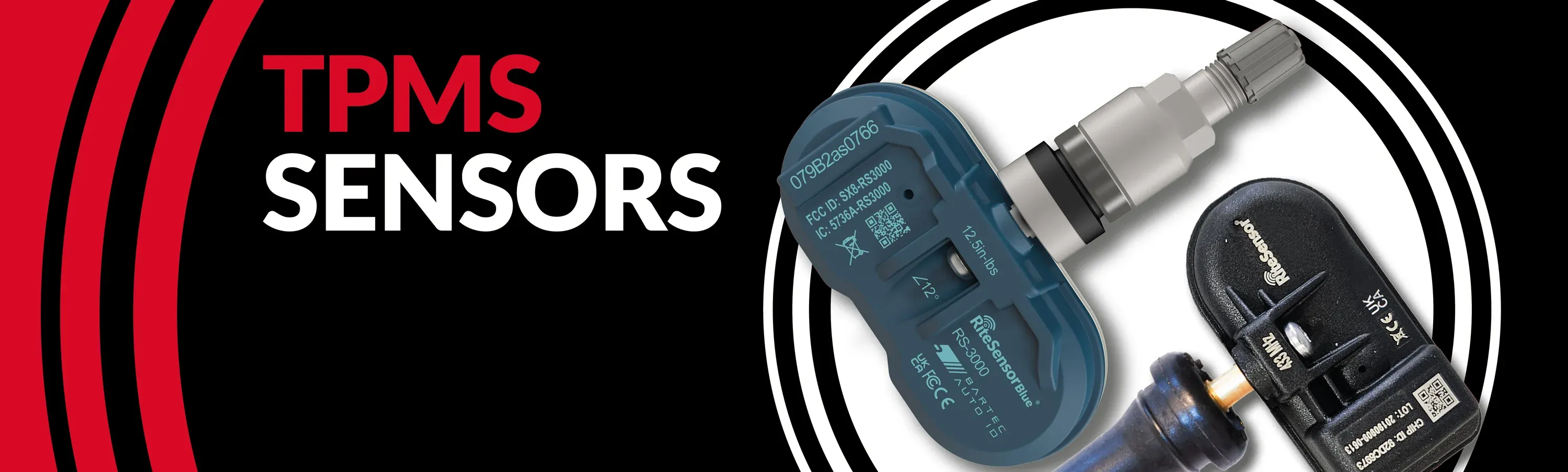
TPMS Sensors
Bartec Auto ID has decades of experience in TPMS technology, working closely with the automotive industry as TPMS and sensor technology has evolved. Today, Bartec offers a range of programmable TPMS sensors for professional tyre shops, garages and automotive technicians. The Rite-Sensor® range provides an aftermarket replacement solution designed to simplify TPMS sensor replacement and reduce the number of different sensors workshops need to stock.
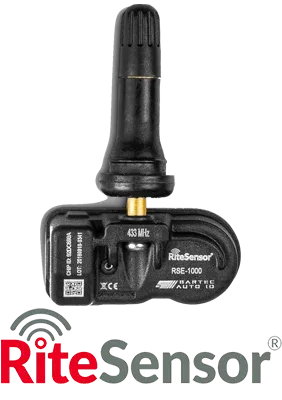
Rite-Sensor® is Bartec’s programmable, single part, replacement aftermarket TPMS Sensor.
- The RS1000 Rite-Sensor® comes assembled with a rubber snap-in valve
- Optional Aluminium clamp-in stem is included, assembly required
- Designed for optimum compatibility with OE and aftermarket wheels - no adjustment necessary
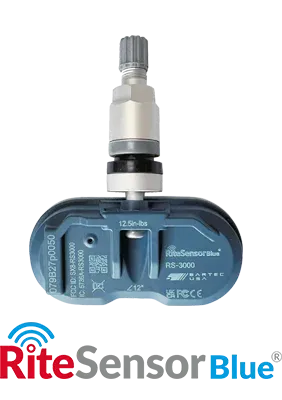
The Bartec Rite-SensorBlue® with Silver Stem is the latest development of our range of Rite-Sensor® Programmable Replaceable TPMS Sensors.
- The RS3000 Rite-SensorBlue® comes pre-programmed with current MMY coverage for Tesla Model 3, Model S, Model Y & Model X
- TPMS Sensor can be programmed to add new MMY coverage
- Clamp-In stems available in silver with a long battery life
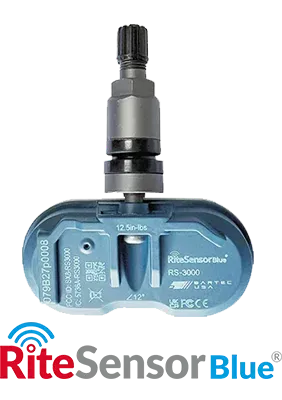
The Bartec Rite-SensorBlue® with Graphite Stem is the latest development of our range of Rite-Sensor® Programmable Replaceable TPMS Sensors.
- The RS3000 Rite-SensorBlue® comes pre-programmed with current MMY coverage for Tesla Model 3, Model S, Model Y & Model X
- TPMS Sensor can be programmed to add new MMY coverage
- Clamp-In stems available in graphite with a long battery life
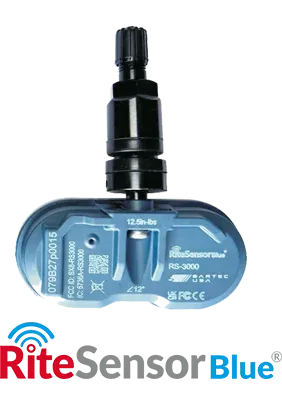
The Bartec Rite-SensorBlue® with Black Stem is the latest development of our range of Rite-Sensor® Programmable Replaceable TPMS Sensors.
- The RS3000 Rite-SensorBlue® comes pre-programmed with current MMY coverage for Tesla Model 3, Model S, Model Y & Model X
- TPMS Sensor can be programmed to add new MMY coverage
- Clamp-In stems available in black with a long battery life
Rite-Sensor® RS1000 vs. Rite-SensorBlue® RS3000
| Feature | Rite-Sensor® RS1000 | Rite-SensorBlue® RS3000 |
|---|---|---|
| Sensor type | Universal programmable TPMS sensor | Programmable BLE TPMS sensor |
| Application | Direct TPMS applications | Compatible BLE / EV applications |
| Programmable | ✔ | ✔ |
| Compatible with Bartec TPMS tools | ✔ | ✔ |
| Bluetooth Low Energy (BLE) | – | ✔ |
| Stem options | Rubber Snap-in / Aluminium Clamp-in | Silver / Graphite / Black Clamp-in |
| Typical use | Compatible direct TPMS replacement applications | Compatible Bluetooth-connected applications |
TPMS Sensors for Professional Tyre and Automotive Applications
Bartec Auto ID offers a range of TPMS sensors for professional tyre shops, garages and automotive technicians. Our programmable TPMS sensors provide extensive vehicle coverage, helping workshops reduce the number of different replacement sensors they need to keep in stock. For compatible vehicle applications, a Bartec programmable sensor can be configured using the appropriate Bartec TPMS tool, providing a practical aftermarket TPMS sensor solution and an alternative to stocking numerous OE sensor part numbers. Explore our range of replacement TPMS sensors and universal, multi-application sensor solutions for professional TPMS servicing.
Want to learn more about TPMS sensors? Read our guide to TPMS sensors, how they work and when they should be replaced, including information on programmable sensors, sensor programming and vehicle relearn.