Bartec Auto ID Tech Tips For Highline Vs Lowline TPMS
27 October 2026
When does a car show each wheels pressure? Not all TPMS systems behave the same, and understanding whether a vehicle is fitted with a high line or low line system can make a big difference during diagnosis and service. High line systems display individual tyre pressures and positions on the dashboard, making it clear which wheel has an issue. Low line systems, on the other hand, typically only trigger a warning light, without showing specific pressure or wheel location information.
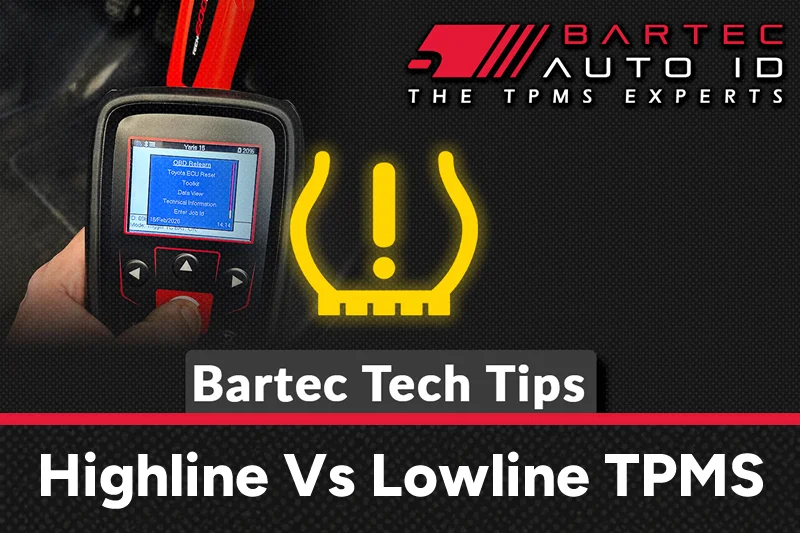
This is where confusion can start, as low line systems don't tell you which sensor or tyre is causing the problem. Without a clear starting point, it's easy to lose time checking pressures or assuming a fault without full information.
Following a Test Before You Touch approach removes this guesswork. By reading each sensor first using your TPMS tool, you can quickly identify pressures, sensor IDs and any faults before carrying out any work on the vehicle.
This ensures you're working with accurate information from the start, rather than relying on limited vehicle feedback, particularly on low line systems where that feedback is minimal.
Understanding the system type and testing first allows you to approach each job efficiently, avoid unnecessary work and complete TPMS service with confidence.
To discover how Bartec Rite-Sensor® and TECH600 can support your workshop, explore our range of TPMS solutions.
For more information about Bartec Auto ID, including the full range of TPMS tools and aftermarket TPMS sensors, visit www.bartecautoid.com.
#TECH600 #TPMSTools #TPMSDiagnosticTools #TPMSSensors #TyreSafetyMonth #TyreSafety #TPMS #TyrePressure #RoadSafety #VehicleSafety #TyreMaintenance #SafeDriving #AutomotiveSafety #FuelEfficiency #StaySafeOnTheRoad
Other Articles
TPMS Sensors For A Wide Range Of Vehicle Applications
26 October 2026
TECH600 TPMS Tool Offering Fast & Reliable Professional Results
21 October 2026
Keeping Vehicles Safe With One TPMS Relearn At A Time
19 October 2026
Tyre Safety Month: Stay Safe, Stay Informed, Check Your TPMS
13 October 2026
Tell Us Why We Are Trusted By TPMS Professionals On Trustpilot
12 October 2026
A Decade Of Trust From RL Services Using Bartec Rite-Sensor® & TECH600 TPMS Tools
09 October 2026
Did You Know That October Is UK Tyre Safety Month
07 October 2026
Bartec Tech Tips For Cold Weather & TPMS Sensors This Winter
05 October 2026
Techfest 2026 At Wembley Was Huge For TPMS In The UK
02 October 2026
TPMS Sensors: What They Are, How They Work & When To Replace Them
29 September 2026