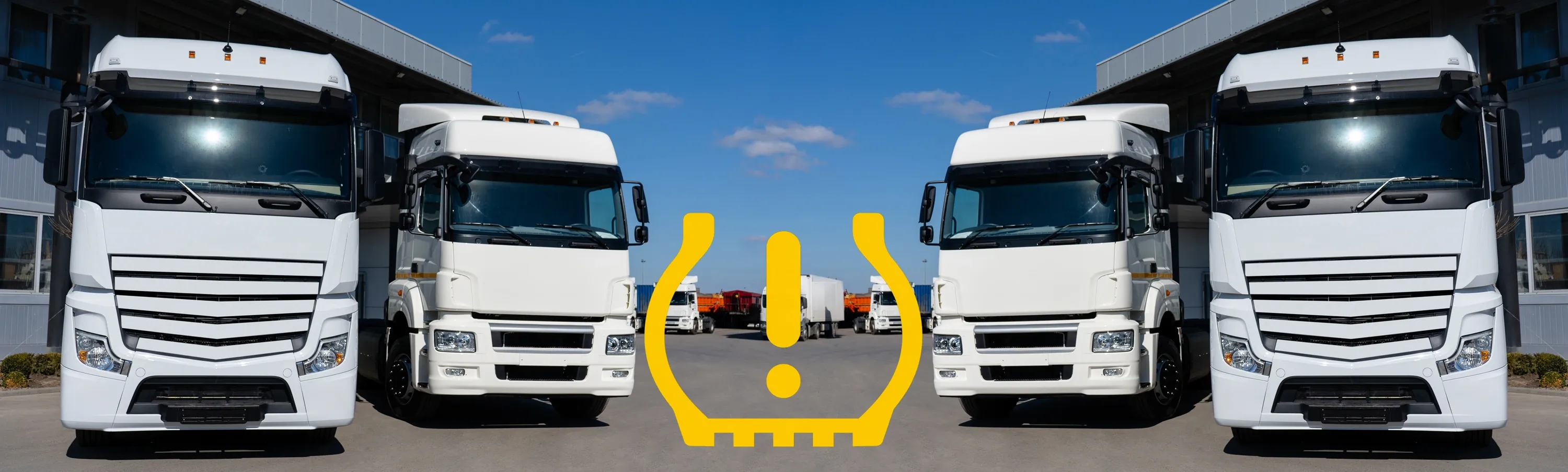
TPMS Solutions For Commercial Vehicles
Tyre Pressure Monitoring Systems (TPMS) are now a key component of modern commercial vehicles. Since July 2024, the UNECE R141 regulation has mandated the use of these systems for newly registered trucks, buses, and trailers.
For workshops and transport companies, this means that TPMS is now part of everyday business. A correctly functioning system improves road safety, reduces tyre failures and extends tyre life. At the same time, maintaining optimal tyre pressure can significantly reduce fuel consumption and operating costs.
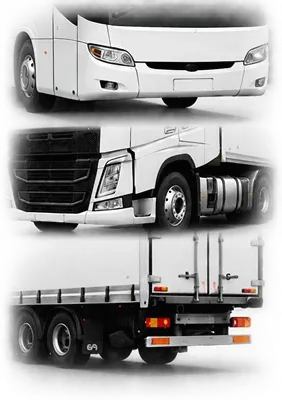
Tyre pressure monitoring systems (TPMS) are now an essential component of modern commercial vehicles.
- In July 2024, UNECE R141 regulations mandated the use of TPMS systems for newly registered trucks, buses & trailers
- Select your Commercial TPMS Tool Service Device the TECH350HD or TECH600HD
- Choose your Universal Commercial TPMS Sensors the RSHD-1 (Rim mounted) and RSHD-2 (Valve mounted)
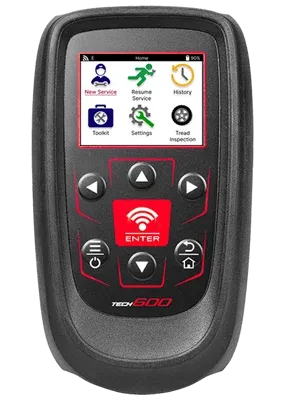
With your own service equipment and the use of universal sensors, you become independent and can perform the complete TPMS service.
- The TECH350HD is the cost-effective entry-level solution for all daily TPMS work in the workshop
- The TECH600HD also offers a completely wireless workflow with Wi-Fi, Bluetooth and wireless OBD communication.
- Designed for optimum Commercial TPMS Programming & Diagnostic Tool management
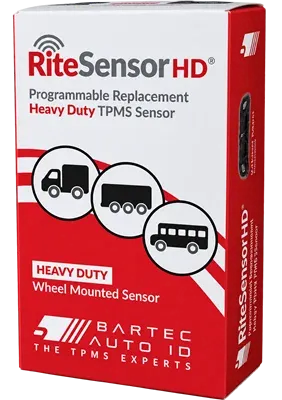
Rite-SensorHD® is Bartec’s programmable, single part, replacement aftermarket Commercial TPMS Sensor.
- Universal Commercial TPMS Sensor RSHD-1 for mounting on the wheel rim
- Universal Commercial TPMS Sensor RSHD-2 for mounting on the wheel valve
- Designed for optimum compatibility with OE and aftermarket wheels - no adjustment necessary
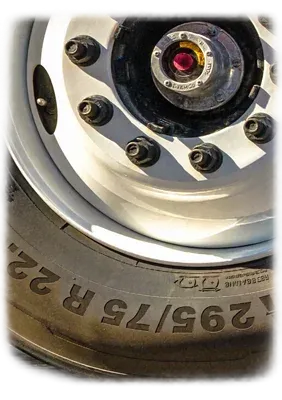
Get complete TPMS support to keep your workshop running efficiently, your vehicles performing safely, and your equipment up to date.
- Expert TPMS Support with practical advice and technical assistance to help workshops
- Keep Your Fleet Moving with reliable TPMS processes that can help improve vehicle safety and performance
- Training, Setup & Updates covering device commissioning, hands-on training and software updates
TPMS Solutions For Commercial Vehicles FAQs & Training Procedures
- When fitting a new tyre with a new sensor, the new sensor must be registered in the TPMS control unit. If the old sensor is used in the same position, no programming is necessary. This is done using the "TPMS Service App" from KRONE – available free of charge in the iOS App Store and Google Play Store.
- Download the "TPMS Service App" from KRONE
- Open the app and register as a workshop.
- Enter code and log in
- Establishing a connection via vehicle identification plate scan: Scan vehicle identification plate
- App connects to control unit
- Then start the TPMS setup.
- Identify the position of the affected sensor and begin the replacement.
- For new sensors: Enter new sensor ID; various options are available:
- Manual entry (e.g., from a 433 MHz reader)
- Scan the QR code on the sensor
- Scan the barcode on the tyre
- Confirm new configuration
THE SOLUTION: Simply clone existing sensors onto universal sensors
- Read the log of the already installed sensor using the TPMS device.
- Transfer the data to the universal sensor with just one click.
- Done! Reattach the wheel with the universal sensor in the same wheel position.
No relearning process is required on the vehicle. By cloning the sensors, the vehicle recognizes them immediately – and your vehicle is ready for use again right away.
- Stationary training procedure required (2 variants)
- Select “Vehicle”, “Tyre Pressure Monitoring”, “Sensor Position” on the display.
- The highlighted wheel indicates which wheel is being taught.
- Activate sensor with device
- When the wheel is confirmed, the vehicle flashes 8 times and the display switches to the next wheel.
Option 2:
- Select “Vehicle”, “Tyre Pressure Monitoring”, “Sensor Position” on the display.
- The highlighted wheel indicates which wheel is being taught.
- Run the wheel that is to be trained.
- When the wheel is confirmed, the vehicle flashes 8 times and the display switches to the next wheel.
- Repeat the process for each wheel.
THE SOLUTION: Simply clone existing sensors onto universal sensors
- Read the log of the already installed sensor using the TPMS device.
- Transfer the data to the universal sensor with just one click.
- Done! Reattach the wheel with the universal sensor in the same wheel position.
No relearning process is required on the vehicle. By cloning the sensors, the vehicle recognizes them immediately – and your vehicle is ready for use again right away.
- After sensors have been installed, the vehicle must remain stationary for at least 10 minutes.
- Inflate tyres to the correct pressure
- For training purposes, drive faster than 24 km/h for 10 minutes.
- Note: The learning process may take longer for vehicles with 3 or 4 axles.
THE SOLUTION: Simply clone existing sensors onto universal sensors
- Read the log of the already installed sensor using the TPMS device.
- Transfer the data to the universal sensor with just one click.
- Done! Reattach the wheel with the universal sensor in the same wheel position.
No relearning process is required on the vehicle. By cloning the sensors, the vehicle recognizes them immediately – and your vehicle is ready for use again right away.
- The vehicle must be stationary for at least 15 minutes.
- Put the vehicle into learning mode using the menu buttons.
- Drive above 32 km/h until the sensors are programmed to the vehicle.
- NOTE: The learning process may take longer depending on the vehicle, axle configuration, and number of sensors!
THE SOLUTION: Simply clone existing sensors onto universal sensors
- Read the log of the already installed sensor using the TPMS device.
- Transfer the data to the universal sensor with just one click.
- Done! Reattach the wheel with the universal sensor in the same wheel position.
No relearning process is required on the vehicle. By cloning the sensors, the vehicle recognizes them immediately – and your vehicle is ready for use again right away.
- No OBD
- To learn the system, refer to the vehicle's operating manual.
THE SOLUTION: Simply clone existing sensors onto universal sensors
- Read the log of the already installed sensor using the TPMS device.
- Transfer the data to the universal sensor with just one click.
- Done! Reattach the wheel with the universal sensor in the same wheel position.
No relearning process is required on the vehicle. By cloning the sensors, the vehicle recognizes them immediately – and your vehicle is ready for use again right away.
To program the TPMS sensors to the vehicle, a DAF OBD II diagnostic tool is required. Please note: This service may incur costs.
THE SOLUTION: Simply clone existing sensors onto universal sensors
- Read the log of the already installed sensor using the TPMS device.
- Transfer the data to the universal sensor with just one click.
- Done! Reattach the wheel with the universal sensor in the same wheel position.
No relearning process is required on the vehicle. By cloning the sensors, the vehicle recognizes them immediately – and your vehicle is ready for use again right away.